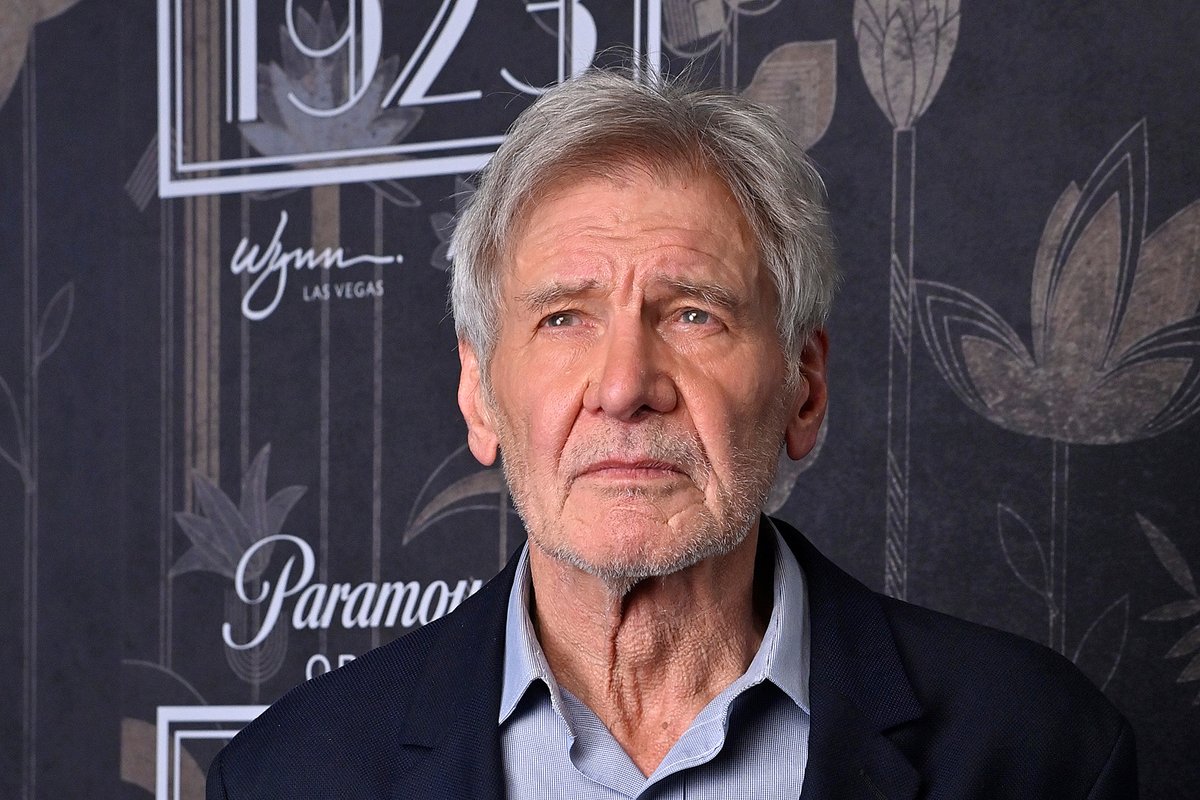
Harrison Fords Personal Insights & Anecdotes Shared on the View
Harrison Ford, a name synonymous with cinematic legends like Indiana Jones and Han Solo, has always been a figure of quiet gravitas. Yet, in recent appearances, particularly when discussing his flurry of new projects, Ford has offered a rare and refreshing glimpse into his personal philosophy, career motivations, and unique perspectives on life at 80. His conversations, including those on popular platforms like The View, reveal a man profoundly comfortable in his own skin, still driven by craft, and surprisingly candid about the journey that brought him here. It's an opportunity to peer beyond the iconic roles and understand the authentic individual.
Here, we delve into Harrison Fords appearance on The View and other recent interviews, uncovering the wisdom, wit, and unexpected vulnerability that makes him an enduring icon.
At a Glance: Harrison Ford's Unfiltered Takeaways
- Ageless Ambition: At 80, Ford is juggling multiple major projects, including Shrinking, 1923, Indiana Jones and the Dial of Destiny, and a significant Marvel role, demonstrating a vibrant "lust for life."
- The Actor's Ethos: He approaches acting with an "empty mind and open heart," valuing spontaneity and truth over rigid preparation, seeing himself as a craftsman.
- Therapy? Not For Him: Ford maintains a clear stance against personal therapy for himself, asserting, "I know who the f**k I am at this point," but is explicitly not anti-therapy for others.
- Beyond the Hero Pilot: He stopped participating in helicopter rescues to ensure proper recognition for the entire team effort, refusing to be framed as the sole "hero."
- A Deeper Connection to Nature: His conservationist spirit, rooted in his philosophy background (Paul Tillich), sees "God" in the complexity and interconnectedness of the natural world.
- Indiana Jones Reimagined: The fifth Indiana Jones film will portray an 80-year-old Indy, reflecting Ford's age with realism, and using de-aging technology for specific flashback sequences.
The Enduring Icon: Why Ford's Insights Matter Now More Than Ever
At an age when many contemplate retirement, Harrison Ford is embarking on a career renaissance, taking on roles that challenge him and delight audiences across various platforms. From the Apple TV+ series Shrinking to the Yellowstone prequel 1923, the highly anticipated Indiana Jones and the Dial of Destiny, and a significant Marvel role as Thunderbolt Ross, his schedule is a testament to his enduring passion and work ethic. This renewed visibility has brought with it an openness that wasn't always characteristic of the notoriously private star.
When Ford graces a talk show set, it's not merely a promotional stop; it's a window into the mind of an industry legend. His candid remarks offer a refreshing counter-narrative to the often-polished celebrity persona, providing genuine insight into how he navigates a demanding career and a rich personal life. His recent reflections shed light on his evolution from a guarded individual to a more balanced and expressive public figure, a transformation noted by long-time colleagues like Helen Mirren.
The Craftsman's Code: An Empty Mind, an Open Heart
For Harrison Ford, acting isn't about method or extensive backstory creation; it's about presence and genuine reaction. He describes his approach as arriving with an "empty mind and open heart," a philosophy that prioritizes spontaneity and truth in the moment. This belief underscores his dedication to the craft, emphasizing authentic emotional responses over contrived performance.
You might wonder how this plays out in practice. In Shrinking, where he portrays a therapist dealing with Parkinson's, Ford found unexpected resonance with the family dynamics, even if his character, Paul, differs significantly from his own life experiences. It's this willingness to engage with the material on an emotional level, rather than intellectualizing it, that defines his performance style. He views his job as helping "sell the product," acknowledging the commercial aspect of his profession, yet he firmly states he "would act for free" if it were purely about the performance itself. This distinction highlights his deep, intrinsic love for acting, separate from its industry demands.
His pragmatic view extends to press interviews, which he sees as a job he needs "to buckle down and do it." This isn't disinterest, but rather a professional commitment to the ecosystem of filmmaking. Ford is, in essence, a craftsman, dedicated to the task at hand, whether it's delivering a line or promoting a film.
On Personal Growth and Vulnerability: Beyond the Therapy Couch
One of Ford's most widely discussed personal insights revolves around his candid perspective on therapy. While not anti-therapy for others, he unequivocally states it's not for him. His reasoning is rooted in a profound sense of self-awareness: "I know who the f**k I am at this point." This declaration isn't dismissive; it's a testament to a lifetime of introspection and self-discovery that has led him to a comfortable understanding of his own being.
He's also addressed past perceptions of social anxiety, clarifying that what some might have mistaken for a disorder was simply unfamiliarity with public speaking or certain social settings. This distinction is crucial, as it dispels misconceptions and offers a more nuanced understanding of his often-reserved public demeanor.
His evolution hasn't gone unnoticed by those closest to him. Helen Mirren, a co-star and long-time observer, beautifully articulates his transformation from a private person to someone "balanced, wise, kind and loving" who now embraces "human vulnerability." Similarly, his Shrinking co-stars Jason Segel and Bill Lawrence highlight his openness to learning, his strong "lust for life," and a delightful "boyish and youthful side" that belies his age. Ford himself refers to his public persona as "protective coloration," suggesting a conscious adaptation of his demeanor based on his company. This insight speaks volumes about the careful balance he strikes between his private self and the public figure.
The Maverick's Path: Career Choices and Creative Control
Despite his monumental success, Harrison Ford has no ambition to direct or produce extensively. His passion lies squarely in performing. He relishes the opportunity to perform diverse roles, actively avoiding being confined to one type or, notably, playing villains. This preference showcases a desire for range and depth in his work, constantly seeking new characters to inhabit.
While he is a "craftsman" committed to a role, Ford is also known to advocate for script changes if he believes it serves the story better. However, he also demonstrates a remarkable adaptability, as seen with Taylor Sheridan's no-rewrite policy on 1923, a rule to which Ford committed. This duality reveals a blend of artistic conviction and professional respect for a director's vision.
Reflecting on his expansive career, Ford doesn't dwell on commercial failures. Instead, he expresses pride in films like 42 and K-19: The Widowmaker, indicating that his measures of success extend beyond box office receipts to the integrity and impact of the work itself. When considering his most challenging roles, he distinguishes between physical demands and performance difficulty. Blade Runner stands out as his most physically taxing film, a testament to the brutal demands of that iconic sci-fi noir. Conversely, Sabrina was his most difficult performance-wise, attributing the struggle to a poor fit with the character, underscoring that even for a veteran, some roles simply don't align. As for awards, he states he doesn't actively seek an Oscar but would be profoundly grateful if a quality film with Oscar ambition were recognized.
Indiana Jones at 80: Embracing Age and Legacy
The return of Indiana Jones in The Dial of Destiny is a particularly poignant chapter in Ford's career. The film bravely depicts an 80-year-old Indy, reflecting Ford's actual age and grounding the narrative in realistic challenges for a hero of that vintage. Director James Mangold made a conscious decision to remove "old Indy" jokes, ensuring the character's age informs, rather than diminishes, his adventures.
One of the most talked-about aspects is the use of cutting-edge de-aging technology for an opening sequence, where AI scans 40 years of Ford's Lucasfilm footage to meticulously recreate his younger face. This allows for a seamless blend of past and present, honoring the character's rich history while propelling his story forward. Steven Spielberg, though not directing, remains intimately involved, a testament to the enduring legacy of the franchise. For Ford, slipping back into the iconic hat, jacket, and whip was initially "bizarre" but quickly felt grounding, a testament to how deeply the character is ingrained within him.
It’s a fascinating layer of trivia that Tom Selleck was the original choice for Indiana Jones, and Ford himself didn't initially consider himself for Han Solo, roles that would define his superstardom. His willingness to take on new ventures, like his Marvel role, stems from seeing other actors enjoy it and his own desire to try new things—a continuous evolution, even in his ninth decade.
Life's Lessons from the Cockpit and the Ranch
Beyond the silver screen, Ford's life is marked by unique experiences that have shaped his perspective. A seasoned pilot, he was involved in a near-fatal plane crash in 2015. His response? He resumed flying, understanding it was due to an unpreventable mechanical issue, not pilot error. This demonstrates a deep understanding of risk and a refusal to let fear dictate his passions.
He also made a conscious decision to stop participating in helicopter rescues, a noble pursuit he engaged in for years. His reason was insightful: the "hero pilot" narrative diminished the crucial team effort involved in such operations. This reflects a humility and a commitment to collective achievement over individual glory.
Ford is a passionate conservationist, owning an 800-acre Wyoming ranch where he moved in the 1980s for his children. This deep connection to nature informs his work on 1923, which resonates with themes of nature's consequences and man's relationship with the land. His philosophical grounding can be traced to his college studies, where he applied Protestant theologian Paul Tillich's idea of "God" not as a deity, but as what is most central to life—equating it with nature's complexity, biodiversity, and symbiotic relationships. This profound perspective adds another layer to his portrayal of characters who often grapple with the wild and untamed.
The Future & The Force: Stepping into Marvel
Harrison Ford's decision to join the Marvel Cinematic Universe as Thunderbolt Ross was driven by a refreshingly simple motivation: he saw other actors enjoying the experience, and he likes trying new things. It speaks to a continuous curiosity and a desire to engage with diverse storytelling avenues, even in a franchise known for its extensive lore and physical demands.
While Ford respects the extreme physical acting demonstrated by peers like Tom Cruise, his own approach often focuses on conveying strength and vulnerability through character, not just stunts. His entry into the Marvel universe promises to bring his signature gravitas and grounded realism to a world often dominated by CGI and larger-than-life heroics, further expanding his already legendary career.
Beyond the Red Carpet: What Harrison Ford's Candor Teaches Us
Harrison Ford's recent candidness, particularly his insights shared on platforms like The View, offer valuable lessons beyond the entertainment world. They speak to the power of authenticity, the wisdom that comes with age, and the enduring passion that can fuel a career for decades. His journey illustrates that true self-awareness isn't about having all the answers but understanding one's own core.
What can you take away from this? Perhaps it's the encouragement to approach your own endeavors with an "open heart," to value the craft in whatever you do, and to define success on your own terms. Ford shows us that embracing vulnerability, clarifying misconceptions, and continuously seeking new experiences—whether in a new role or a personal passion—are hallmarks of a life well-lived. His story reminds us that even after achieving iconic status, there's always more to learn, more to experience, and more of oneself to share.